Q&A
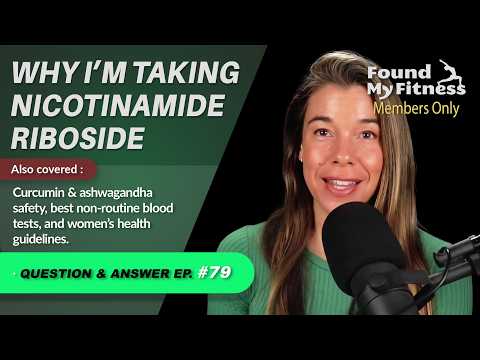
Q&A #79: Why I’m Taking Nicotinamide Riboside—Safety, Uncertainty, & Cycling Concerns
Dr. Rhonda Patrick discusses nicotinamide riboside, biomarkers, belly fat loss, sex-specific health, curcumin & ashwagandha safety.
FoundMyFitness library
Ranked by shared topics, with one result from each original episode.
Q&A
Dr. Rhonda Patrick discusses nicotinamide riboside, biomarkers, belly fat loss, sex-specific health, curcumin & ashwagandha safety.
Q&A
Dr. Rhonda Patrick answers audience questions on various health, nutrition, and science topics in this Q&A session.
Q&A
“The discussion of fiber and nutrient or supplement absorption begins at 19:38. The Oats and beta-glucan topic provides the wider cholesterol evidence and explains why whole oats, beta-glucan powder, and psyllium should not be compared solely by their serving weights.”
Q&A
Dr. Rhonda Patrick discusses urolithin A, postmenopausal protein, microplastics, high-temperature saunas, sugar intake, and supplements for Parkinson's disease.
Q&A
Dr. Rhonda Patrick discusses memory, tendon and bone health, male fertility, and the benefits of blueberries.
Episode
Dr. Rhonda Patrick reviews nicotine for Alzheimer's prevention, melatonin and heart failure risk, fermented foods, and saffron for mood and sleep.
Q&A
Dr. Rhonda Patrick answers audience questions on various health, nutrition, and science topics in this Q&A session.
Clip
“But evidence suggests that supplemental vitamin D in lactating women can increase breast milk concentrations to levels that are adequate to reduce the risk of deficiency in breastfed infants. In this clip, Dr. Rhonda Patrick describes the data suggesting that maternal supplemental vitamin D can reduce the risk of deficiency in breastfed infants.”
Clip
“Similarly, the timing of eating and exercise, especially in elite athletes, has not been studied and may, in fact, require self-experimentation by the athletes as they find the perfect interval of fasting to support their optimal performance.”
Clip
“A national survey analysis estimated 2.6% severe deficiency, 22% moderate deficiency, and 40.9% insufficiency among US adults, although prevalence changes with the threshold used. These categories should remain distinct because insufficiency is not the same as clinical deficiency.”