Q&A
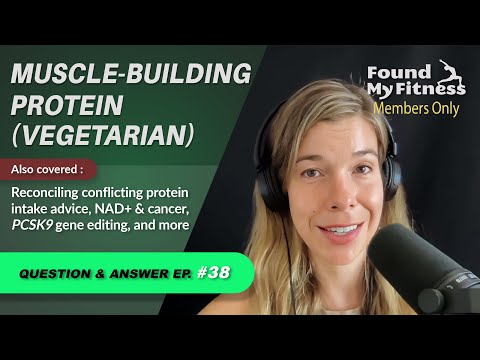
Q&A #38: Protein for Muscle and Longevity—Plant Sources, mTOR, & Cancer
Dr. Rhonda Patrick answers audience questions on various health, nutrition, and science topics in this Q&A session.
FoundMyFitness library
Ranked by shared topics, with one result from each original episode.
Q&A
Dr. Rhonda Patrick answers audience questions on various health, nutrition, and science topics in this Q&A session.
Q&A
Dr. Rhonda Patrick answers audience questions on various health, nutrition, and science topics in this Q&A session.
Q&A
Dr. Rhonda Patrick answers audience questions on various health, nutrition, and science topics in this Q&A session.
Q&A
Dr. Rhonda Patrick explores blood tests to track health, statin alternatives, mitochondrial supplements, and vitamin B12 and autism risk in her latest Q&A.
Q&A
Dr. Rhonda Patrick discusses resistant starch, red light therapy risks, stem cells, and the link between benzodiazepines and dementia in her latest Q&A session.
Q&A
Dr. Rhonda Patrick discusses xylitol safety, strategies to reduce hemoglobin A1C, klotho and dementia risk, and the timing of hormone replacement therapy.
Q&A
Dr. Rhonda Patrick discusses GLP-1 agonists, alpha-lipoic acid, ubiquinone vs. ubiquinol, calcium needs, and liquid biopsy cancer screening.
Q&A
“This is a personal preparation example, not the high-dose oat regimen used in clinical research or a measured 3-gram beta-glucan serving. For the research on LDL cholesterol, microbial metabolites, and oat preparation, see Oats and beta-glucan.”
Q&A
Dr. Rhonda Patrick reviews the evidence for nattokinase, how oat beta-glucans may aid with PFAS excretion, and HRT for APOE4 carriers.
Q&A
“The discussion of fiber and nutrient or supplement absorption begins at 19:38. The Oats and beta-glucan topic provides the wider cholesterol evidence and explains why whole oats, beta-glucan powder, and psyllium should not be compared solely by their serving weights.”