Q&A
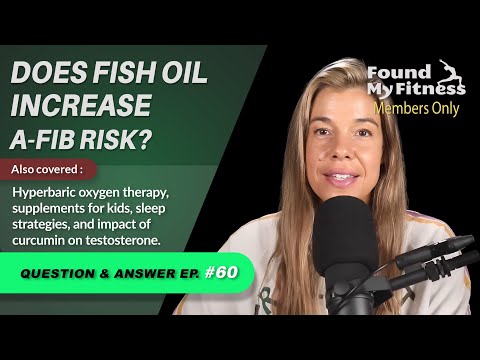
Q&A #60: Does Fish Oil Increase Atrial Fibrillation Risk?
Dr. Rhonda Patrick discusses fish oil and Afib risk, hyperbaric oxygen therapy, supplements for kids, and curcumin's impact on testosterone.
FoundMyFitness library
Ranked by shared topics, with one result from each original episode.
Q&A
Dr. Rhonda Patrick discusses fish oil and Afib risk, hyperbaric oxygen therapy, supplements for kids, and curcumin's impact on testosterone.
Q&A
Dr. Rhonda Patrick discusses if smoked salmon is carcinogenic, high-dose melatonin, creatine on workout vs. non-workout days, and the Neurocode brain scan.
Q&A
Dr. Rhonda Patrick discusses Akkermansia muciniphila, vitamin B1's effect on blood sugar, emulsifiers in food, and electrolyte supplements.
Q&A
Dr. Rhonda Patrick covers lithium microdosing, reducing homocysteine, aluminum's link to cancer, and beta-alanine and alpha-lipoic acid supplements.
Q&A
Dr. Rhonda Patrick discusses urolithin A, postmenopausal protein, microplastics, high-temperature saunas, sugar intake, and supplements for Parkinson's disease.
Clip
“The main ingredient-interaction evidence concerns polyphenol oxidase. A small controlled crossover study found that a high-PPO banana smoothie greatly reduced circulating flavan-3-ol metabolites compared with a low-PPO berry drink or capsule control.”
Clip
“But evidence suggests that supplemental vitamin D in lactating women can increase breast milk concentrations to levels that are adequate to reduce the risk of deficiency in breastfed infants. In this clip, Dr. Rhonda Patrick describes the data suggesting that maternal supplemental vitamin D can reduce the risk of deficiency in breastfed infants.”
Clip
“Similarly, the timing of eating and exercise, especially in elite athletes, has not been studied and may, in fact, require self-experimentation by the athletes as they find the perfect interval of fasting to support their optimal performance.”
Clip
“Candidates include vitamin D, omega-3 fatty acids, and TA-65, a product that purportedly contains extracts of astragalus membranaceus, a plant-based compound that demonstrates immunomodulatory, anti-oxidative stress, and anti-aging effects, the latter of which are associated with longer telomeres.”
Clip
“A national survey analysis estimated 2.6% severe deficiency, 22% moderate deficiency, and 40.9% insufficiency among US adults, although prevalence changes with the threshold used. These categories should remain distinct because insufficiency is not the same as clinical deficiency.”