Q&A
Q&A #49: How Can You Lower ApoB With APOE4—and Can You Slow or Reverse Gray Hair?
Dr. Rhonda Patrick answers audience questions on various health, nutrition, and science topics in this Q&A session.

FoundMyFitness library
Ranked by shared topics, with one result from each original episode.
Q&A
Dr. Rhonda Patrick answers audience questions on various health, nutrition, and science topics in this Q&A session.

Q&A
Dr. Rhonda Patrick discusses Akkermansia muciniphila, vitamin B1's effect on blood sugar, emulsifiers in food, and electrolyte supplements.
Q&A
Dr. Rhonda Patrick discusses stroke risk, eczema, immune resilience, her new smoothie recipe, and whether everyone should cut out gluten.
Clip
“Dr. Satchin Panda and his colleagues at the Salk Institute in La Jolla, California, have created an app, MyCircadianClock, that allows users to track their daily health behaviors, including eating, sleeping, moving, and taking supplements and medications.”
Clip
“In a four-month randomized trial of 88 overweight, untrained middle-aged adults, daily doses of 500 or 1,000 milligrams improved some muscle and mitochondrial measures, while the primary outcome of peak power did not significantly improve.”
Clip
“In this clip from Q&A #70, Dr. Rhonda Patrick organizes cancer prevention around the largest modifiable foundations: avoid tobacco, maintain a healthy body composition, and stay physically active.”
Clip
“In a small crossover trial involving people with insulin resistance, six one-minute intense intervals performed before the three main meals improved daily glucose control compared with one continuous 30-minute session.”
Clip
In this clip, Dr. Patrick explains how intense exercise beneficially alters tryptophan and kynurenine metabolism in a way that may benefit depression.
Clip
“Metformin, a drug commonly used to treat type 2 diabetes, has garnered interest as a longevity compound because it was shown to extend lifespan in some animal models. These effects are variable and seem to depend on the age and gender of the animals, as well as the dose provided.”
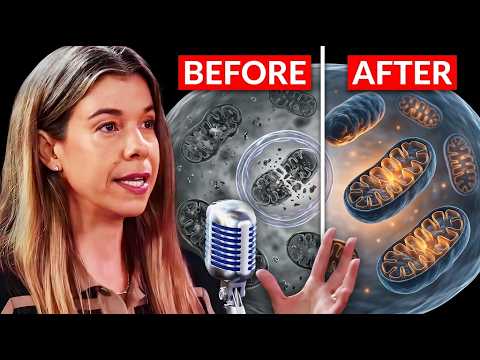
“Mitochondria are best known for their energy-producing roles, but they also help regulate cellular metabolism, signaling, and apoptosis (programmed cell death). As a result, mitochondrial health is intrinsically linked to overall health.”