Q&A
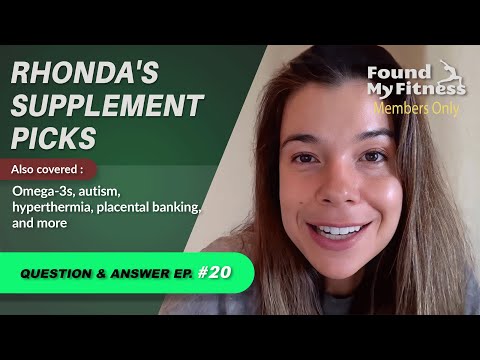
Q&A #20: Rhonda’s 2021 Supplement Routine—Omega-3 Dosing, Brands, & Safety
Dr. Rhonda Patrick answers audience questions on various health, nutrition, and science topics in this Q&A session.

FoundMyFitness library
Ranked by shared topics, with one result from each original episode.
Q&A
Dr. Rhonda Patrick answers audience questions on various health, nutrition, and science topics in this Q&A session.

Q&A
Dr. Rhonda Patrick answers audience questions on various health, nutrition, and science topics in this Q&A session.
Q&A
Dr. Rhonda Patrick answers audience questions on various health, nutrition, and science topics in this Q&A session.
Q&A
Dr. Rhonda Patrick answers audience questions on various health, nutrition, and science topics in this Q&A session.
Q&A
Dr. Rhonda Patrick answers audience questions on various health, nutrition, and science topics in this Q&A session.
Clip
“Dr. Panda discusses the effects of time-restricted feeding on systemic inflammation; time-restricted eating as an opportunity for night-time repair that may prevent intestinal hyperpermeability (i.e., leaky gut), a primary source of systemic inflammation; and how the timing of macronutrients may differentially affect gut permeability.”
Clip
“In this clip from Dr. Rhonda Patrick's appearance on The Tim Ferriss Show, she describes the supplements her parents use and separates a simple nutritional baseline from choices tied to individual health needs.”
Clip
“She highlights its roles in brain health and homocysteine metabolism. Product quality matters for omega-3 supplements because these fats oxidize readily; she favors products with third-party testing for oxidation and labeled EPA and DHA content, with algal oil as a vegan option.”
Clip
“Scientists are investigating the effects that Wim Hof's breathing methods have on the immune system. Study results showed that individuals trained in his breathing practices produced adrenaline when injected with a bacterial endotoxin, potentially affecting the immune response.”
Clip
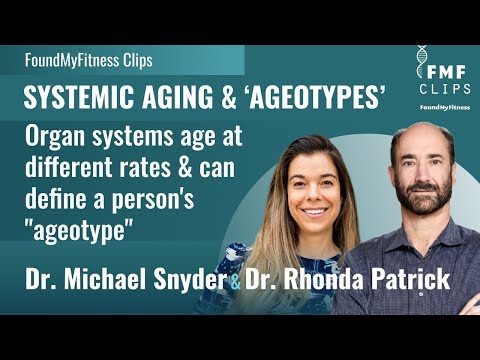
“In this clip, Dr. Michael Snyder discusses how people age in distinct ways and at varying rates and how knowing our "ageotype" might offer targets for preventing age-related diseases.”