1
Collection
What FoundMyFitness Has Covered
PremiumLipoprotein(a), or Lp(a), is an LDL-like particle associated with higher risk of atherosclerosis, heart disease, and stroke when levels are elevated. In a study of healthy men, both alpha-linolenic acid (ALA) and linoleic acid (LA) lowered…
Your Premium Brief connects insights across FoundMyFitness to help you see the bigger picture.
Based on available source text from 9 of the first 10 results.
2
 Clip
Clip
Clip
Inflammation is a key regulator of lipoprotein metabolism | Ronald Krauss
“Inflammation is a feature of many chronic diseases, including heart disease, however, it is also critical to a healthy immune response. Apolipoprotein B, a protein synthesized by the liver, allows for the rapid production of lipoproteins during an immune response.”
3

Science Digest
Omega-3 and omega-6 fatty acids reduce lipoprotein(a) levels in healthy men, influencing cardiovascular disease risk.
“Lipoprotein(a) [Lp(a)] is a type of low-density lipoprotein (LDL). High Lp(a) levels increase a person's risk for atherosclerosis, heart disease, and stroke. A recent study found that alpha-linolenic acid (ALA) and linoleic acid (LA) both reduce Lp(a) concentrations in healthy men, but ALA is more effective at lowering cholesterol.”
4
Topic
Topic
Time-restricted eating
“The researchers noted that time-restricted eating may be an effective therapy in conjunction with statins and anti-hypertensive medication. Statins are recommended in high-risk patients to reduce low-density lipoprotein cholesterol below 100 milligrams per deciliter of plasma.”
5
 Episode
Episode
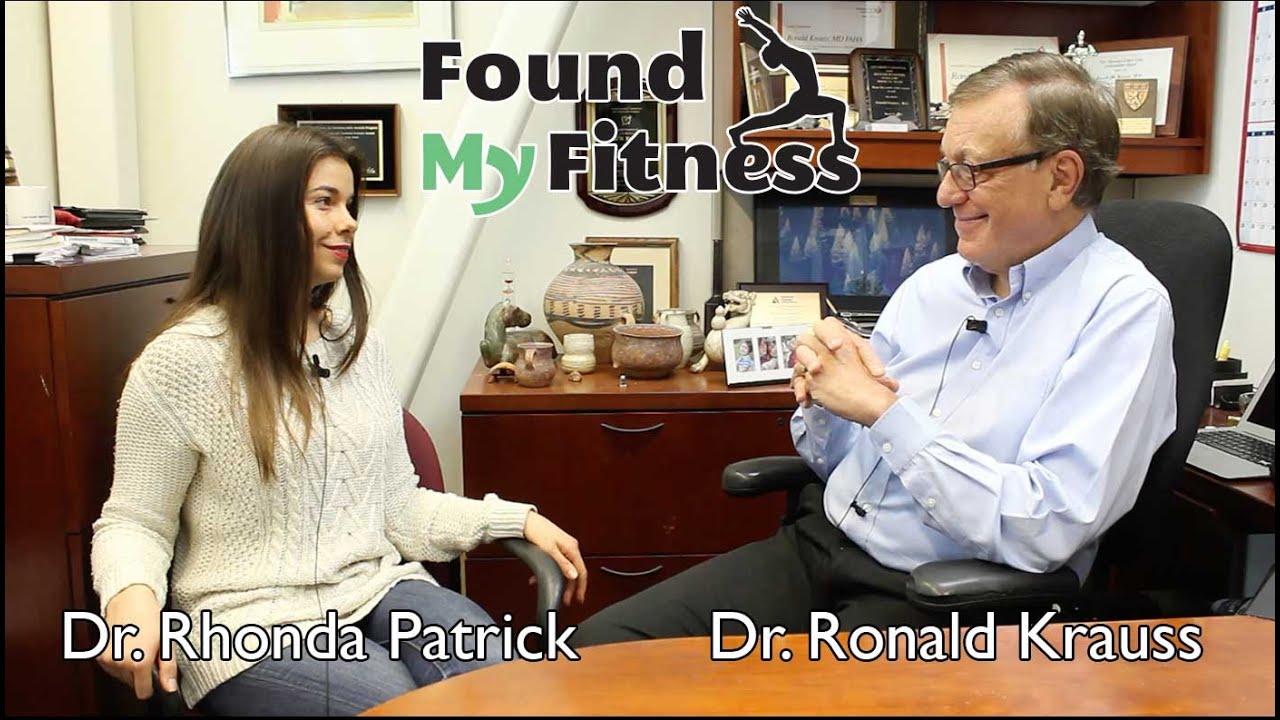
Dr. Ronald Krauss on LDL Cholesterol, Particle Size, Heart Disease & Atherogenic Dyslipidemia
“Relevant studies Tumor necrosis factor acutely increases plasma levels of very low-density lipoproteins of normal size and composition. Meta-analysis of prospective cohort studies evaluating the association of saturated fat with cardiovascular disease.”
6
Topic
Topic
Creatine
“Furthermore, those who supplemented experienced a 23 percent reduction in triacylglycerides and a 22 percent reduction in very-low-density lipoprotein (VLDL) – the lipoproteins that can convert into the atherosclerotic low-density lipoproteins – compared to baseline.”
7

Aliquot
Premium
Aliquot #31: A powerful tool for assessing cholesterol levels: The ion mobility particle test
“An assay that quantifies low-density lipoprotein particle size and concentration based on a principle of physics called ion mobility may be better at identifying those at risk for heart disease.”
8
Topic
Topic
Resveratrol
“The participants' low-density lipoprotein cholesterol (LDLc) decreased by 4.5 percent, oxidized LDL decreased by 20 percent, and apolipoprotein B decreased by 9.8 percent.”
9
Topic
Topic
Intestinal permeability
“Circulating LPS can bind to lipoproteins, facilitating their absorption in the liver during LDL recycling, effectively removing LPS from circulation and lowering systemic inflammation. However, small, dense lipoproteins are not easily recycled.”
10
Topic
Topic
Berberine
“Animal evidence Multiple studies in rabbits and rats fed obesity-promoting diets demonstrate that berberine reduces serum total cholesterol, low-density lipoprotein (LDL) cholesterol, and triglycerides and increases high-density lipoprotein (HDL) cholesterol.”
Results 1–10 of 132