Q&A
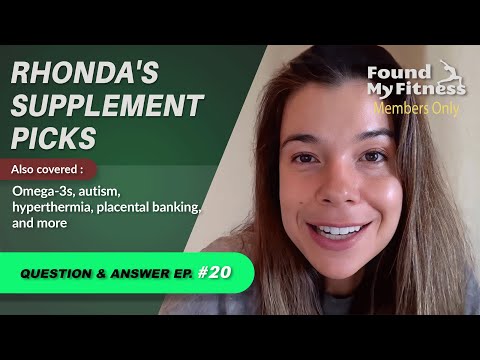
Q&A #20: Rhonda’s 2021 Supplement Routine—Omega-3 Dosing, Brands, & Safety
Dr. Rhonda Patrick answers audience questions on various health, nutrition, and science topics in this Q&A session.
FoundMyFitness library
Ranked by shared topics, with one result from each original episode.
Q&A
Dr. Rhonda Patrick answers audience questions on various health, nutrition, and science topics in this Q&A session.
Q&A
Dr. Rhonda Patrick answers audience questions on various health, nutrition, and science topics in this Q&A session.
Q&A
Dr. Rhonda Patrick answers audience questions on various health, nutrition, and science topics in this Q&A session.
Q&A
Dr. Rhonda Patrick answers audience questions on various health, nutrition, and science topics in this Q&A session.
Q&A
Dr. Rhonda Patrick answers audience questions on various health, nutrition, and science topics in this Q&A session.
Clip
“Dr. Panda discusses the effects of time-restricted feeding on systemic inflammation; time-restricted eating as an opportunity for night-time repair that may prevent intestinal hyperpermeability (i.e., leaky gut), a primary source of systemic inflammation; and how the timing of macronutrients may differentially affect gut permeability.”
Episode
“Removing former drinkers from the non-drinker category reveals a different story: One study observed that the lowest risk for cardiovascular disease (i.e., ischemic heart disease) was right below one standard U.S. drink per week — men and women at this level of consumption had an ~18% lower risk compared to nondrinkers.”
Clip
“Dr. Huberman’s practical range is deliberately cautious: not drinking avoids the exposure, and lower weekly intake creates less burden than a drink every night or heavier episodes.”
“A May 2025 Nature paper showed taurine uptake may fuel aggressive myeloid leukemias in laboratory and mouse models, illustrating how nutrients beneficial to healthy tissues may also feed certain cancers.”
“These changes increase infection risk, weaken vaccine responses, and reduce early cancer surveillance. Yet immune aging is not fixed. Movement, sleep, stress regulation, temperature exposure, and nutrition shape immune cell balance and inflammatory activity over time.”