• Episodes
  • Topics
  • AMA
  • Science Digest
  • The Aliquot
  • Genetics
Sign in Become a member
Search
Back to episode

FoundMyFitness library

Related Episodes for Does meal frequency matter for time-restricted eating? | Ruth Patterson

Ranked by shared topics, with one result from each original episode.

51
Clip
Clip

Why Resting Heart Rate Can Be More Practical Than HRV for Recovery

May 31, 2024

“In this clip from his FoundMyFitness interview with Dr. Rhonda Patrick, Dr. Benjamin Levine explains why recovery is part of training rather than time lost between workouts. Hard sessions trigger protein synthesis, vascular signaling, and muscular remodeling, but those changes need lower-stress time to develop.”
exercise performance biomarkers stress
Watch clip
52
Clip
Clip

Fasting as Healthspan Maintenance, Relevance for Tissue Rejuvenation, Cancer & More | Rhonda Patrick

Apr 9, 2022

“Dr. Patrick explains some of the early evidence that suggests the value prolonged fasting (48+ hours) may have from the standpoint of tissue rejuvenation and healthspan maintenance, as well as relevance for other more specific conditions.”

fasting cancer diet aging
Watch clip
53
Clip
Clip

Discovery of genes that reset the Horvath Clock | David Sinclair

Nov 7, 2019

“Dr. Shinya Yamanaka discovered a group of proteins that can reprogram differentiated (mature) cells into pluripotent stem cells. These proteins, now called Yamanaka factors, are highly expressed in embryonic stem cells in mice and humans.”

aging epigenetics fasting crispr
Watch clip
54
Clip
Clip

How the body produces glucose via gluconeogenesis during ketosis | Dominic D'Agostino

May 26, 2020

“The body has elegant mechanisms that allow it to utilize non-carbohydrate substrates to generate glucose. Gluconeogenesis is a metabolic pathway in which the liver produces glucose from non-carbohydrate substrates including glucogenic amino acids (from protein) and glycerol (from lipids).”

ketosis metabolism performance fasting
Watch clip
55
Clip
Clip

GrimAge vs. Telomere length: a better biomarker for aging | Steve Horvath

Dec 29, 2020

“However, the DNAm GrimAge epigenetic clock is a highly reliable predictor of healthspan and lifespan, based on DNAm surrogates in blood, including biomarkers of aging and alterations in blood composition.”

epigenetics aging telomeres biomarkers
Watch clip
56
Clip
Clip

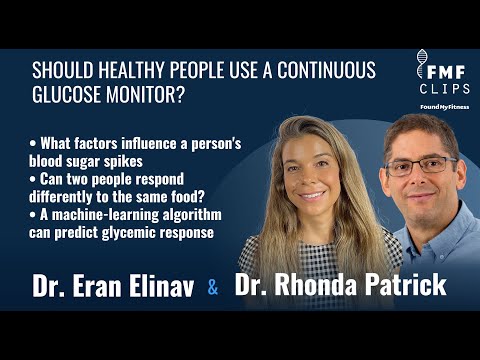
Should healthy people use a continuous glucose monitor? | Dr. Eran Elinav

Feb 21, 2022

“The algorithm — based on factors including blood parameters, dietary habits, and gut microbiota — was employed in a clinical trial, where researchers showed that personally tailored diets lowered post-meal blood glucose levels.”

microbiome diet diabetes biomarkers
Watch clip
57
Clip
Clip

How AI Could Reduce Diagnostic Errors

Aug 12, 2026

“Studies of physician-AI collaboration show that workflow matters. In one randomized simulated-management trial, physicians using GPT-4 received higher management-reasoning scores than physicians using conventional resources, although they took longer.”

technology cancer biomarkers diagnostics
Watch clip
58
Clip
Clip

How Fasting Changes Fat Burning and Brain Fuel

Aug 17, 2026

“In this clip from Dr. Rhonda Patrick's appearance on The Diary of a CEO, she explains that a shorter eating window can make calorie reduction easier, while a longer overnight fast shifts fuel use toward fatty acids and ketones.”

exercise metabolism ketosis fasting
Watch clip
59
Clip
Clip

How Late-Night Eating Affects Sleep, Glucose, and Blood Pressure

Aug 7, 2026

“In a 7.5-week randomized trial of 39 adults with overweight or obesity, a 13-to-16-hour overnight fast that ended food intake at least three hours before habitual sleep improved nighttime diastolic blood-pressure dipping by about 3.5 percent and lowered nighttime diastolic pressure by about 1.8 mm Hg.”

sleep circadian rhythm melatonin insulin
Watch clip
60
Clip
Clip

How Meal Composition May Affect Inflammation and Brain Fog

Mar 17, 2026

“Mouse studies of feeding during infection also found different responses across bacterial and viral models, so a minimally processed dietary pattern, regular exercise, and normal hydration and nutrition during illness provide a more useful foundation than one universal food or fasting rule.”

nutrition exercise brain omega-3
Watch clip
Load more related episodes

Explore More

  • Home
  • Episodes
  • Membership
  • The Aliquot
  • About
  • Healthspan Gear
  • Genetics

Our Mission

Promoting strategies to increase healthspan, well-being, cognitive and physical performance through deeper understandings of biology. Learn more about Dr. Rhonda Patrick.

Questions?

Send us a message here

Search

Follow us here

  • Instagram
  • Twitter
  • Facebook

Watch and listen

  • YouTube
  • Apple Podcasts
  • Spotify
This site is protected by reCAPTCHA and is subject to the Google Privacy Policy and Terms of Service, as well as our own Privacy Policy and Terms of Service.