Q&A
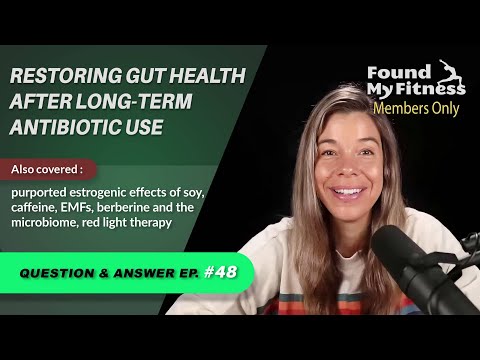
Q&A #48: Are Sunflower Oil and Soy Foods Harmful?—Plus Restoring Gut Health After Antibiotics
Dr. Rhonda Patrick answers audience questions on various health, nutrition, and science topics in this Q&A session.
FoundMyFitness library
Ranked by shared topics, with one result from each original episode.
Q&A
Dr. Rhonda Patrick answers audience questions on various health, nutrition, and science topics in this Q&A session.
Q&A
Dr. Rhonda Patrick answers audience questions on various health, nutrition, and science topics in this Q&A session.
Q&A
Dr. Rhonda Patrick discusses Akkermansia muciniphila, vitamin B1's effect on blood sugar, emulsifiers in food, and electrolyte supplements.
Q&A
Dr. Rhonda Patrick discusses stroke risk, eczema, immune resilience, her new smoothie recipe, and whether everyone should cut out gluten.
Clip
“Dr. Satchin Panda and his colleagues at the Salk Institute in La Jolla, California, have created an app, MyCircadianClock, that allows users to track their daily health behaviors, including eating, sleeping, moving, and taking supplements and medications.”
Clip
“In a four-month randomized trial of 88 overweight, untrained middle-aged adults, daily doses of 500 or 1,000 milligrams improved some muscle and mitochondrial measures, while the primary outcome of peak power did not significantly improve.”
“However, dietary strategies, pharmaceuticals, and some supplements may reduce ApoB levels. In this Aliquot – a follow-up to Aliquot #81 – Dr. Peter Attia and I talk about some of the nutritional, pharmaceutical, and supplemental approaches to reduce ApoB.”
“Because some long-chain PFAS travel through a similar pathway, researchers are now asking whether beta-glucans might also help the body eliminate these persistent "forever chemicals."”
“Cholesterol is vital to human health, but an oversimplified view of cholesterol — that high-density lipoprotein (HDL) cholesterol is good, and low-density lipoprotein (LDL) cholesterol is bad — has led to a gross misunderstanding of the nuances that define the differences in cholesterol-containing lipoproteins.”
“Statins can reduce the risk of heart disease by 30 to 40 percent due to their ability to increase LDL receptor activity and reduce blood cholesterol levels. Whether the drugs are overprescribed (or perhaps under-prescribed) is a matter of great debate.”