Q&A
Q&A #55: Red Yeast Rice vs. Statins—Cholesterol, Diabetes Risk, & Supplement Contamination
Dr. Rhonda Patrick explores iodine supplementation, choline & TMAO, curcumin safety, and red yeast rice in her latest Q&A.

FoundMyFitness library
Ranked by shared topics, with one result from each original episode.
Q&A
Dr. Rhonda Patrick explores iodine supplementation, choline & TMAO, curcumin safety, and red yeast rice in her latest Q&A.
Q&A
Dr. Rhonda Patrick explores creatine, dairy's effect on polyphenols, eggs' health impact, and new weight loss drugs like Ozempic in her latest Q&A.
Q&A
Dr. Rhonda Patrick discusses resistant starch, red light therapy risks, stem cells, and the link between benzodiazepines and dementia in her latest Q&A session.
Q&A
Dr. Rhonda Patrick discusses silicone safety, grounding, pentadecanoic acid, and the potential benefits of olive leaf extract and peptides.
Q&A
Dr. Rhonda Patrick covers lithium microdosing, reducing homocysteine, aluminum's link to cancer, and beta-alanine and alpha-lipoic acid supplements.
Q&A
Dr. Rhonda Patrick discusses urolithin A, postmenopausal protein, microplastics, high-temperature saunas, sugar intake, and supplements for Parkinson's disease.
Clip
“The comparison depends on what a dietary fat replaces. Randomized trials show that replacing palmitic acid, a common saturated fat, with unsaturated fats lowers LDL cholesterol and apolipoprotein B without a consistent effect on glucose, insulin, or C-reactive protein.”
Clip
“A small one-year randomized trial in older adults appeared to buffer decline on a verbal-learning task and increased activation in selected frontal regions; the result needs replication and does not establish broad cognitive enhancement.”
Clip
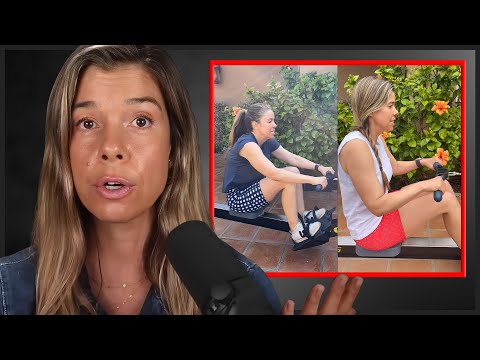
“In a small crossover trial involving people with insulin resistance, six one-minute intense intervals performed before the three main meals improved daily glucose control compared with one continuous 30-minute session.”
Clip
“Pattern matters: five drinks on one occasion is not equivalent to five spread across meals and days. Dr. Patrick discusses drinking with meals as part of the observed social pattern, not as proof that food neutralizes alcohol-related harm.”